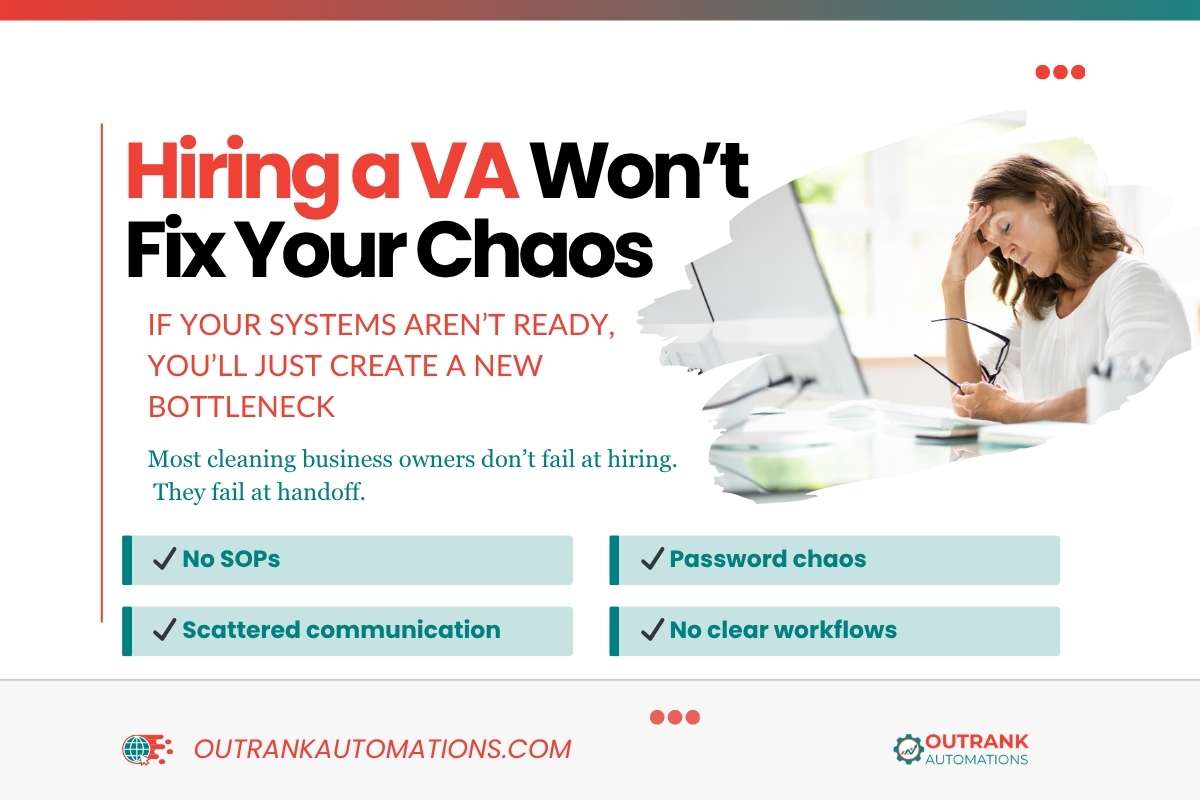
Before You Hire a VA: Fix Your Systems First | Cleaning Business Guide
A lot of owners think hiring a VA will create instant relief.
Then week one starts.
The new person is asking questions. Passwords are missing. Notes live in five places. No one knows where the SOPs are. The phone setup is incomplete. The owner becomes the help desk, the trainer, the backup plan, and the bottleneck all over again.
That is usually the moment people say, “Maybe I should just do it myself.”
But most of the time, the problem is not that the person you hired was the wrong one. The problem is that the business was not ready for them.
And honestly, this is one reason I prefer the term remote employee over just saying VA. “Assistant” can sound like someone who is there to take random things off your plate. A remote employee should feel like a real member of the team, with a clear role, clear tools, and a real structure to step into.
Scanner Highlights
Hiring relief does not come from the person alone. It comes from the systems they step into.
A remote employee needs clarity from day one, not scattered tools and tribal knowledge.
The same setup that helps a remote employee also helps your in-office admin team operate better.
The real issue is not hiring. It is handoff.
The systems that matter most before you hire
Before you bring someone into this role, there are a few basics that make a bigger difference than most owners realize.
First, they need a professional business identity. That means a company email with your domain, not a random personal Gmail that makes things harder to track and harder to trust.
Second, they need a safe way to access tools. If passwords are floating around in text threads, sticky notes, or your memory, you are creating friction and risk at the same time. A system like LastPass is not just a convenience. It is part of being professional.
Third, they need a clear communication home base. Whether you use Google Chat, Slack, or another platform, your team should know where fast questions go, where updates go, and what kind of communication belongs where.
Fourth, they need organized training and documentation. SOPs should not live in a pile of old Loom links, random screenshots, and half-finished notes. Put them in one place. Keep them simple. Make them usable.
And finally, they need a clear workflow environment. That could mean Trello, Notion, ClickUp, or another system. The tool matters less than the clarity — but the key is that there is a single place work gets captured and tracked.
This doesn’t stay in the office
The real issue is not hiring. It is handoff.
When a new remote employee joins a cleaning company, they are stepping into a business where communication affects everything. It affects the client experience. It affects technician schedules. It affects follow-up, notes, timing, and trust.
If your systems are scattered, the confusion does not stay in the office. It travels.
A simple gut check
If a new person started tomorrow, could they quickly understand:
where to log in
where to find answers
how to communicate
what success looks like
what they own versus what they should escalate
If the answer is no, hiring another person will not solve the pressure you are feeling. It may increase it.
The Bottom Line
The goal is not to hire “help.” The goal is to build a dependable team member who can actually reduce your dependence on yourself.
That only happens when the systems are ready first.
If you want this level of clarity to be consistent for every new cleaning tech, book a demo here.
We’ll walk you through the exact workflow: the messages, check-ins, and standards reinforcement that happen automatically after a new hire starts.
Hiring support: If you are hiring a VA soon, explore our VA hiring process here
Client retention: Learn about Lead & Client Nurture automations. We help you automate follow-up from lead to recurring client so fewer prospects slip through the cracks.
